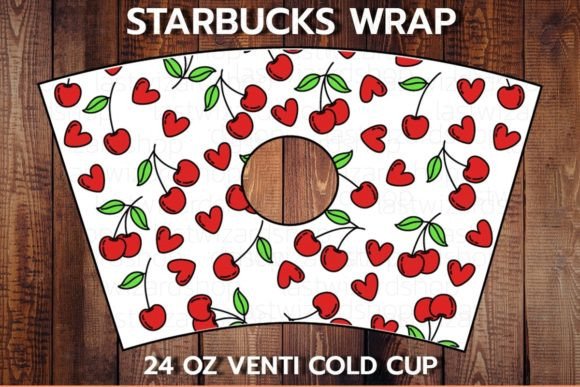
Cherry Fruit 24oz Cup SVG
A Designer’s First Look: Bright, Playful—But Is It Embroidery-Ready?
When I opened Cherry Fruit 24oz Cup SVG for the first time, my instinct was to zoom in—not to check resolution, but to see how much breathing room the cherries have between stems and leaves. This isn’t just a fruit motif; it’s a full-wrap layout built for curvature, which means every curve, overlap, and negative space needs to translate cleanly into stitch. Visually, it reads as cheerful and summery—perfect for handmade totes, baby onesies, or café-themed kitchen towels—but embroidery isn’t about how it looks on screen. It’s about how it holds up when stitched at 8x10 inches on a textured cotton tote, or scaled down for a child’s cap.
Real Project Test: A Custom Embroidered Tote for a Local Bakery Pop-Up
Last week, I used Cherry Fruit 24oz Cup SVG as the centerpiece for a limited-run embroidered canvas tote—intended for a small-batch bakery launching seasonal cherry scones. I resized it to fit a 5” x 7” hoop, placed it slightly off-center on the front panel, and chose matte cotton thread in deep ruby and leafy sage. The result? Clean satin-stitched cherries with subtle gradient shading, crisp stem lines, and no visible distortion—even across the slight fabric drape near the gusset. That tells me the vector foundation is solid. No jagged edges. No unintentional gaps where fill stitches would float or skip. As a machine embroidery design, it behaved like something built *for* stitching—not just for printing.
Where It Shines (and Where It Needs Extra Care)
Cherry Fruit 24oz Cup SVG works especially well for:
- Custom apparel — Sweatshirts, relaxed-fit tees, and aprons where the cherries read clearly at arm’s length
- Personalized gifts — Baby bibs, nursery pillow covers, and holiday tea towels where charm matters more than photorealism
- Small shop product branding — Think boutique coffee merch, farmers’ market bags, or craft fair aprons that need instant recognition and warmth
- Digital embroidery file versatility — Since it includes SVG, DXF, and PNG, you can prep mockups fast, convert for applique, or layer with text in Silhouette Studio or Cricut Design Space
But—and this is key—it’s not universally forgiving. On thin or stretchy fabrics like jersey or lightweight rayon, the outer curves may pull or distort unless you use cutaway stabilizer underneath. And while the design avoids tiny lettering or micro-details, the leaf veins are fine enough that they’ll blur on dark fabric without high-contrast thread or careful underlay planning. If you’re planning an embroidered patch or cap front, test the smallest version you’ll use in your hoop first. Curved surfaces compress detail, and what looks lush on a flat towel may feel crowded on a structured cap bill.
What It Adds to Your Finished Product—Beyond Just “Cute”
This isn’t filler graphics. As a digital embroidery file, Cherry Fruit 24oz Cup SVG elevates perceived value because it feels intentional—not clip-art. Customers notice when fruit shapes have weight, when stems curl naturally, and when color transitions suggest depth rather than flat blocks. That translates directly to trust: a handmade product with thoughtful design signals care, even before the first stitch. For Etsy sellers or craft business owners, that nuance helps listings stand out in search feeds and increases buyer engagement—especially when paired with clean printable mockups showing the design on real tote bags or sweatshirts.
It also supports brand consistency. Whether you're building a line of seasonal kitchen textiles or launching a mini collection around “fruit & function,” this design anchors the theme without locking you into one colorway or format. Swap thread colors to match spring pastels or autumn rusts. Flip the layout for left-chest placement. Use the SVG as a base to add monogram initials in a complementary script. That flexibility makes it strong design assets—not just decoration.
Practical Embroidery Designer Notes Before You Stitch
Before sending Cherry Fruit 24oz Cup SVG to your machine, here’s what I always do:
- Run a test on scrap fabric matching your final project’s weight and texture
- Check thread color contrast—especially on dark backgrounds—using both black-and-white and color mockups
- Review stitch density in the leaf clusters; dense fill areas can stiffen lightweight fabric if over-stitched
- Confirm your hoop size fits the intended placement—remember, full-wrap implies flow, not rigidity
- Inspect corners and curves at 200% zoom in your embroidery software to spot potential jump stitches or unnecessary trims
- Use appropriate stabilizer: tear-away for stable cottons, cutaway for knits, and water-soluble for delicate layers
- Verify licensing terms—since this is marketed as a commercial-use digital embroidery file, confirm whether finished products (like embroidered totes) can be sold without restriction
Final Thought: A Thoughtful Tool, Not a Shortcut
Cherry Fruit 24oz Cup SVG doesn’t promise effortless results—but it does promise reliable starting ground. As a Crafts category graphic, it bridges digital convenience and tactile craft intention. It’s the kind of embroidery file that feels like it was made by someone who’s stitched cherries before, who knows how stems catch on hoop edges, how red thread fades faster in sunlight, and why a customer will pay $5 more for a tote that feels like it was designed *with them* in mind—not just for them. Whether you're prepping for a holiday craft fair, building your Etsy embroidery shop, or simply making something joyful for your own kitchen, this is a design that earns its place—not just in your library, but in your finished product.